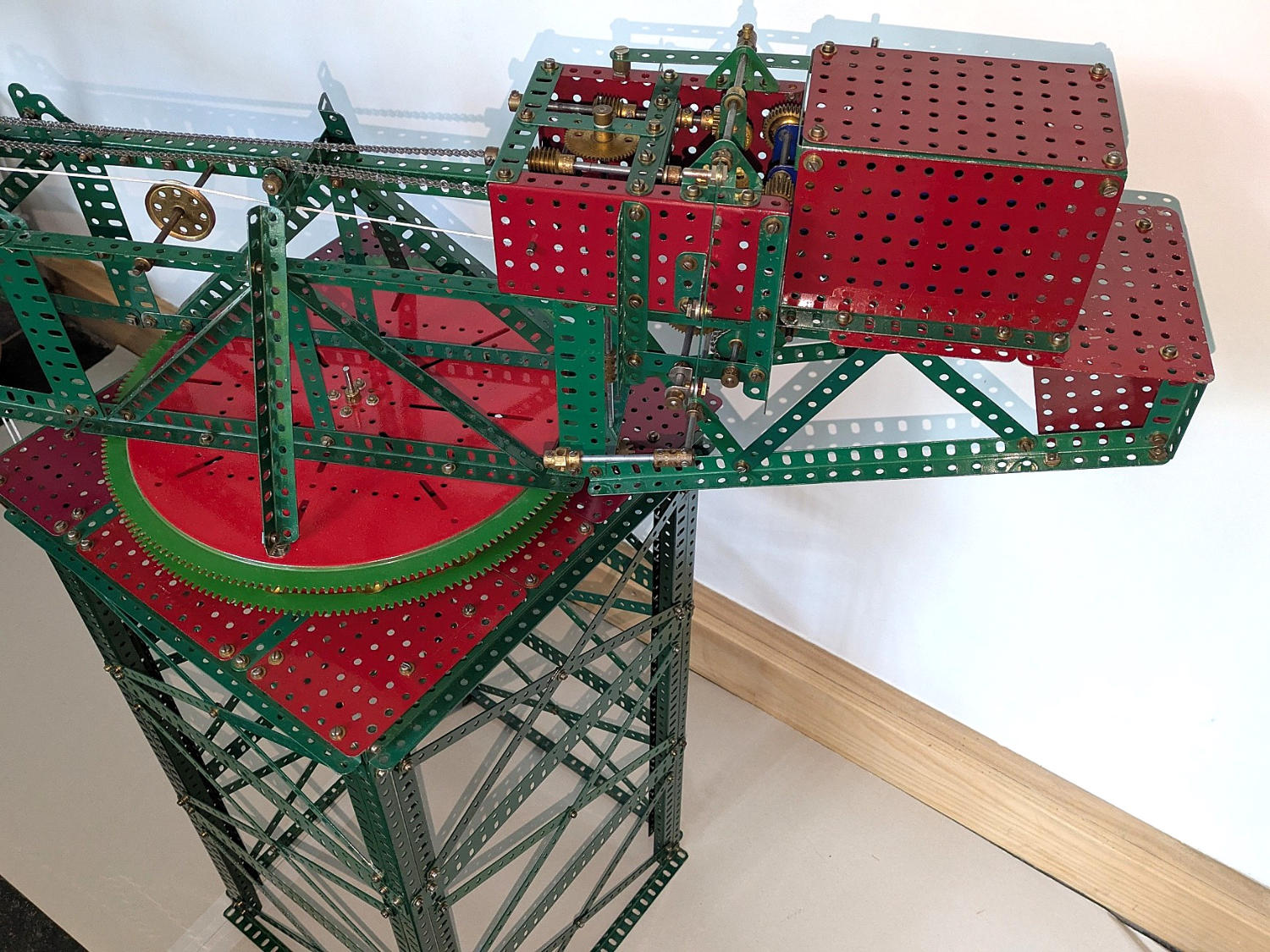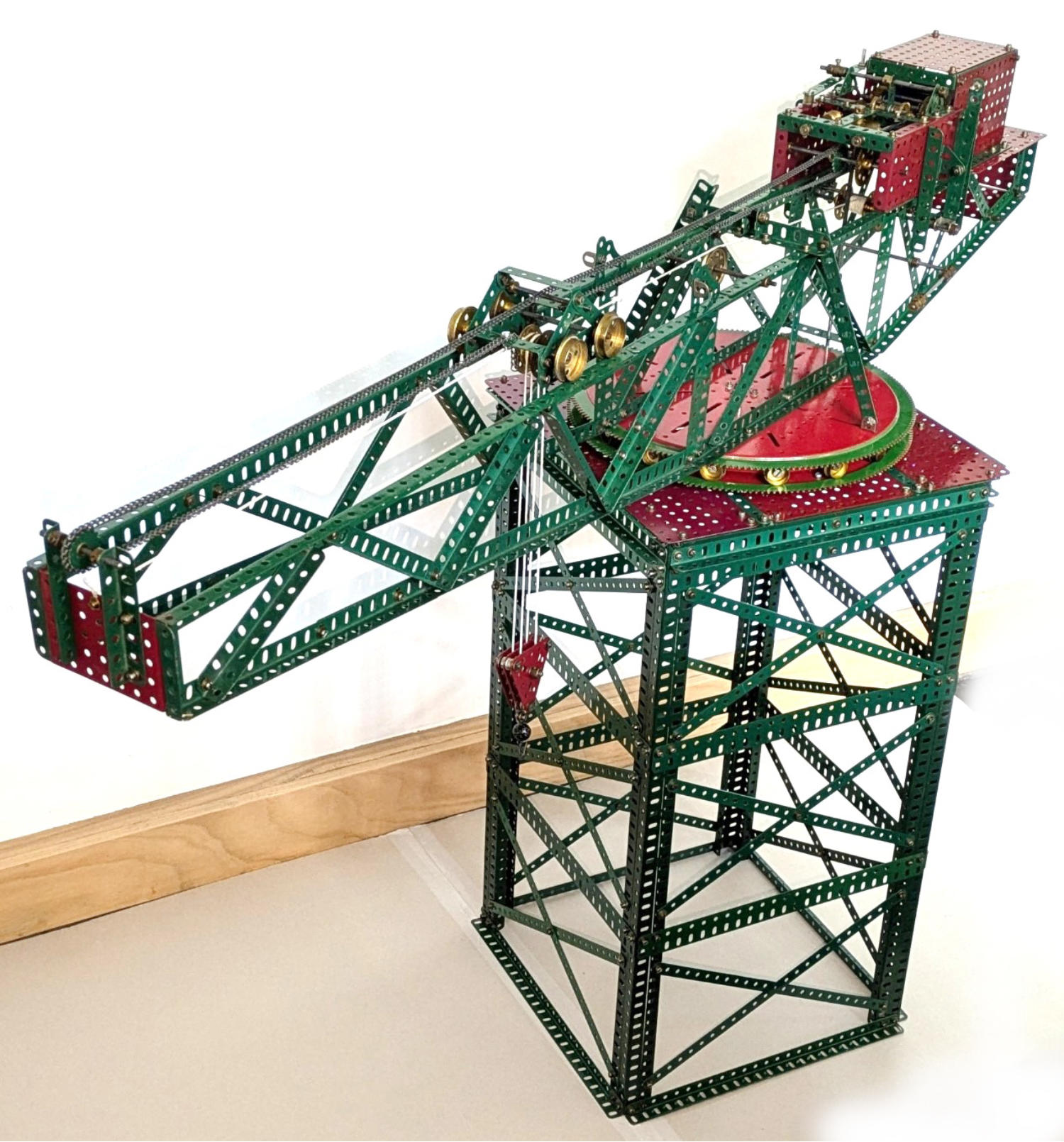

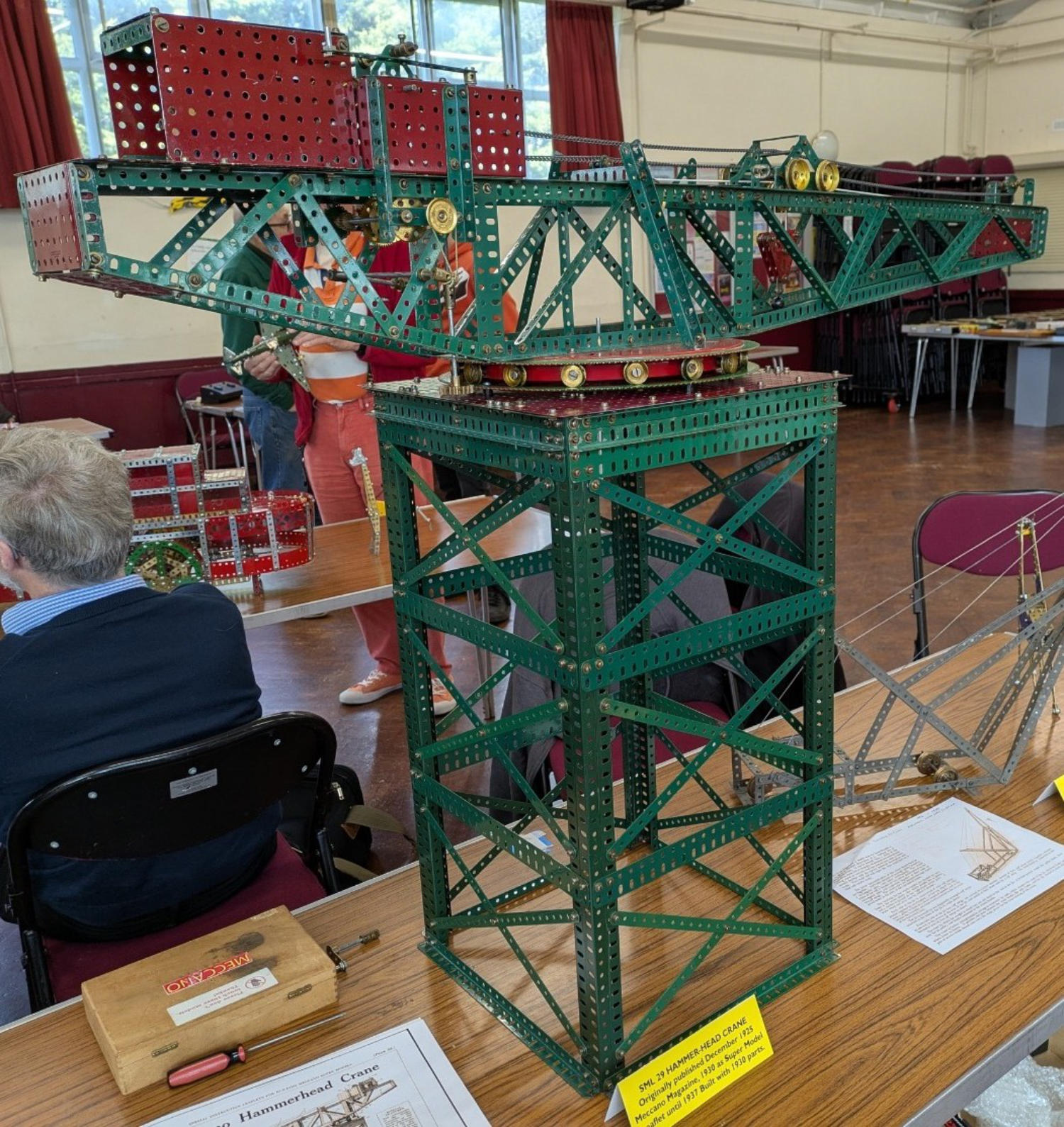
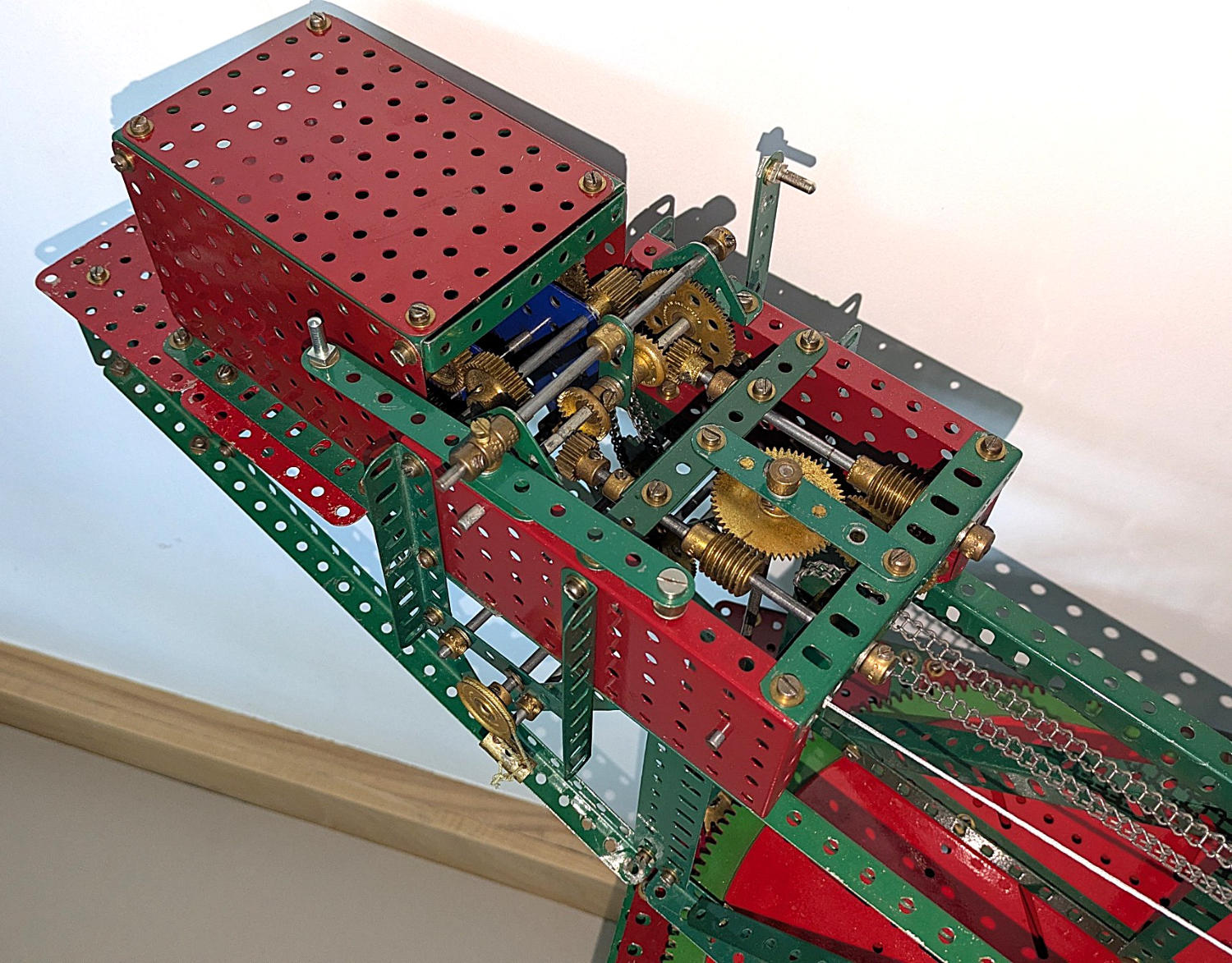
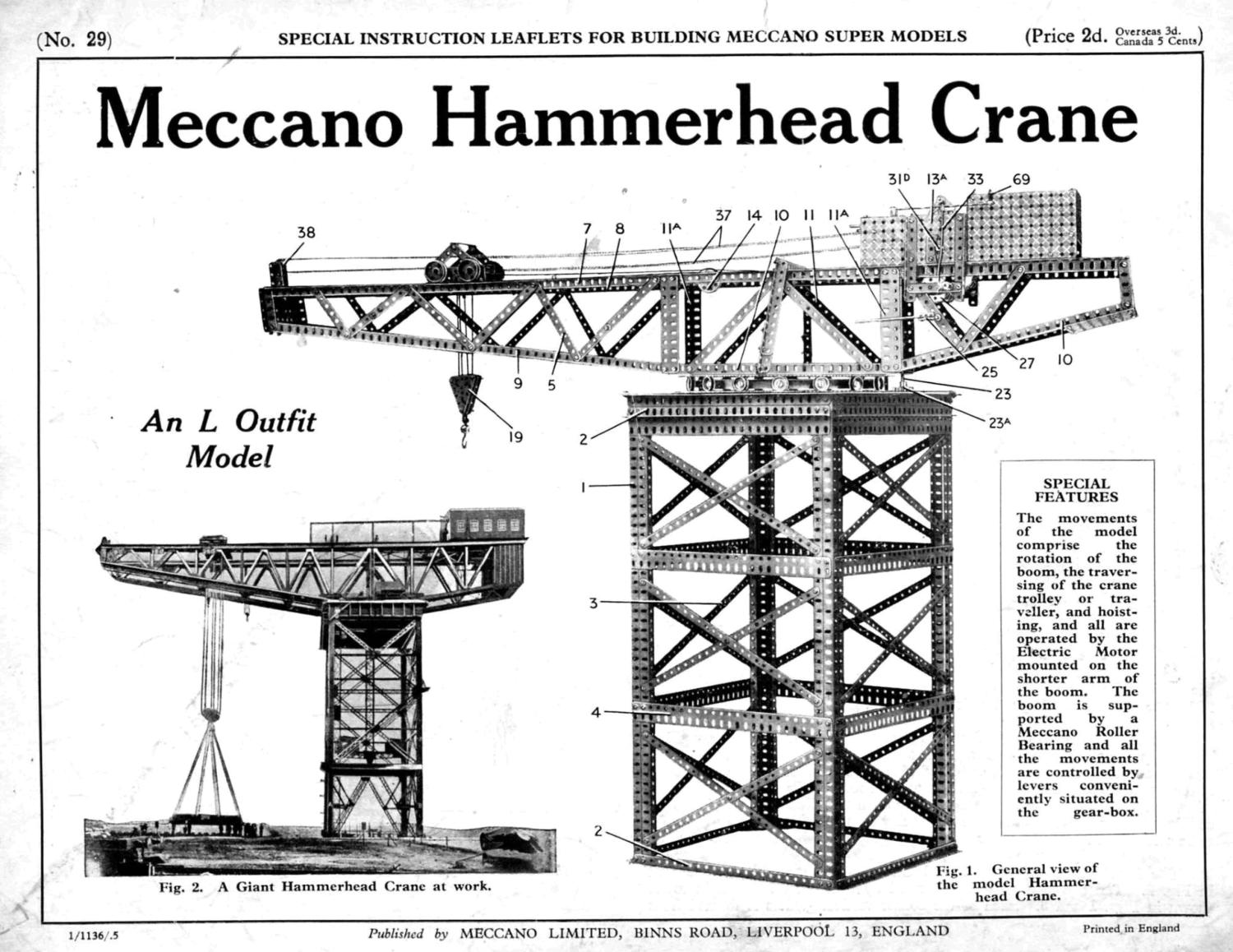
Original 1934 instruction leaflet front cover
Click on the images to see larger pictures.
I have built several Hammer-head cranes but this is the first time I have built
this "classic" Super Model SML 29. The instructions for this crane were
originally published in the December 1925 Meccano Magazine and were re-
published in 1930 as SML 29 as part of the Super Model Leaflet series.
In 1934 the leaflet was revised and was shown in the new blue/gold colour
scheme and included the Geared Roller Bearing the crane and was shown as
an "L" set model. The "L" set did not in fact include the GRB or sufficient P/N
7 24.5" girders. The original 1930 instructions had used a built up roller
bearing from 16 channel segments although it was pointed out that “readers
who have the new p/n 167 Geared Roller Bearing this can be used in place of
the arrangement shown.” You may wonder why it was not shown in the 1930
instructions? The reason was Meccano had just lifted the instructions straight
from the 1925 Meccano Magazine and this per-dated the introduction of the
GRB and did not bother to make major changes other than text to the 1930
leaflet. The cover of the 1934 leaflet is shown above left.
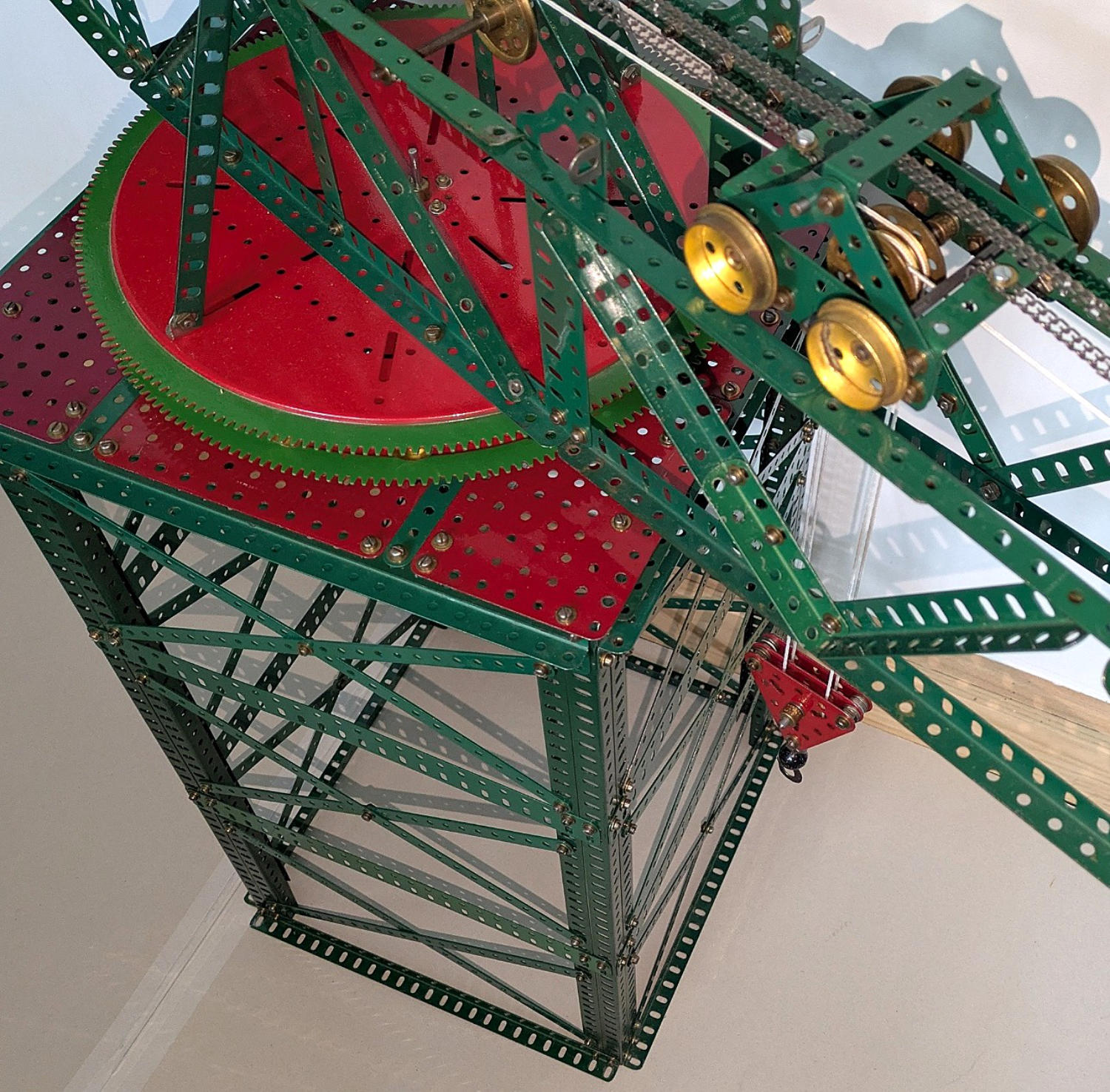
I have built the model using parts from my circa 1930 No. 7 red and green set
plus a modern reproduction GRB. I followed the second 1934 version plans
with few changes, the only major one being the substitution of cross bracing
strips with girders on the boom. The reason was to make the boom less
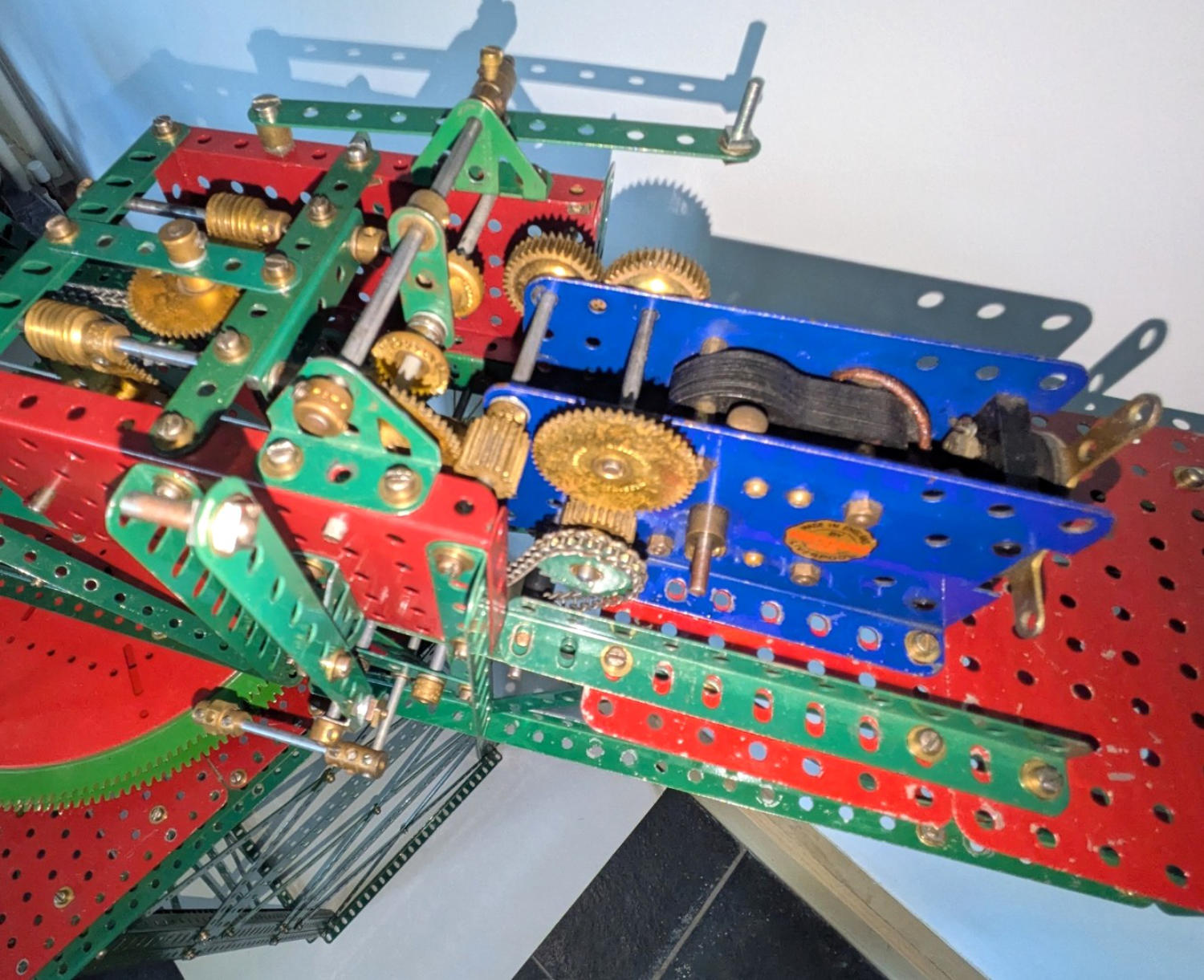
flimsy and more rigid. The crane is powered by a E20B motor. To operate the
crane, gears for each function must first be engaged and then the E20B
motor switched on. The crane can be slewed, the crab or trolley can
transverse the boom and the hoist pulley block can be lowered or lifted. The
hoist has a weighted cord brake that does work with a moderate load.
The prototypes of this type of crane were built between the 1900s - 1950s
and can still seen be at naval dockyards and ship builders around the world.
Although referred to as "Hammer Head Cranes" the more correct term should
be a "Giant Cantilever Crane". There are or were fine examples on
Clydeside, Cowes, Halifax Nova Scotia and Sydney Australia. They were
designed to be used for very heavy lifting during the fittingly out and repair of
large ships. Many of the cranes were capable of lifts of over 250 tonnes.
Their use was some what restricted as they were built in a fixed position on
the dock side.

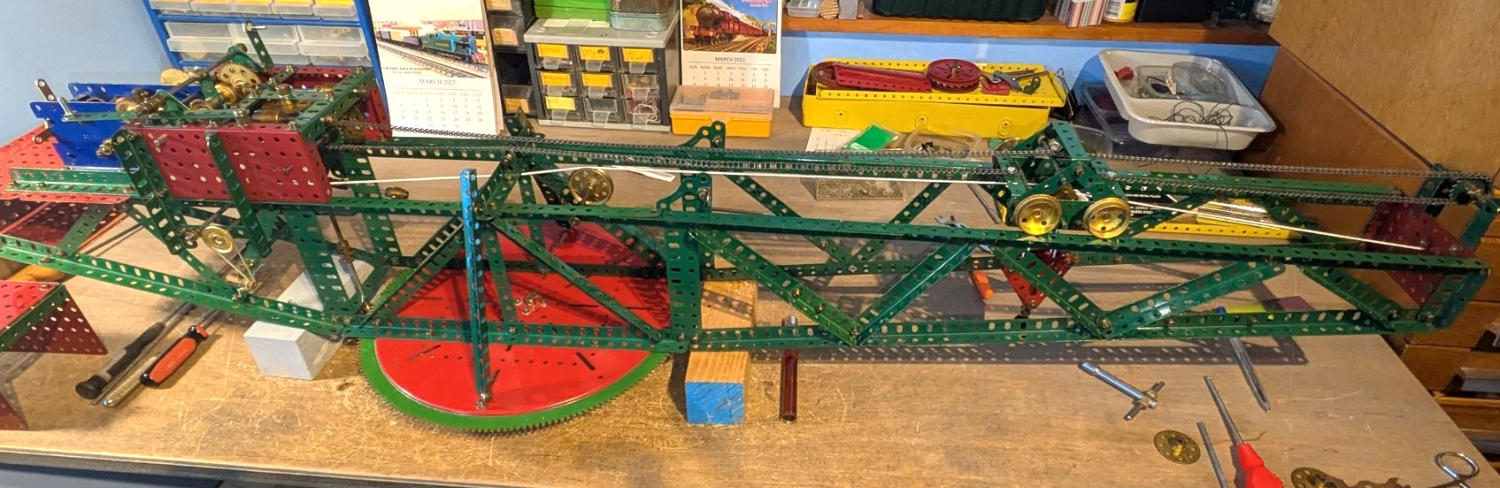
The picture above shows the completed boom
on the bench for testing.
Some years back I built what might be
considered a much improved version of this
model based more closely on a prototype
Hammer-head crane. You see about this by
clicking on the image on the left. There are
several other Hammer-Head cranes on my
website in the cranes gallery.
Published April 23 2026 Revised 20/09/2026